

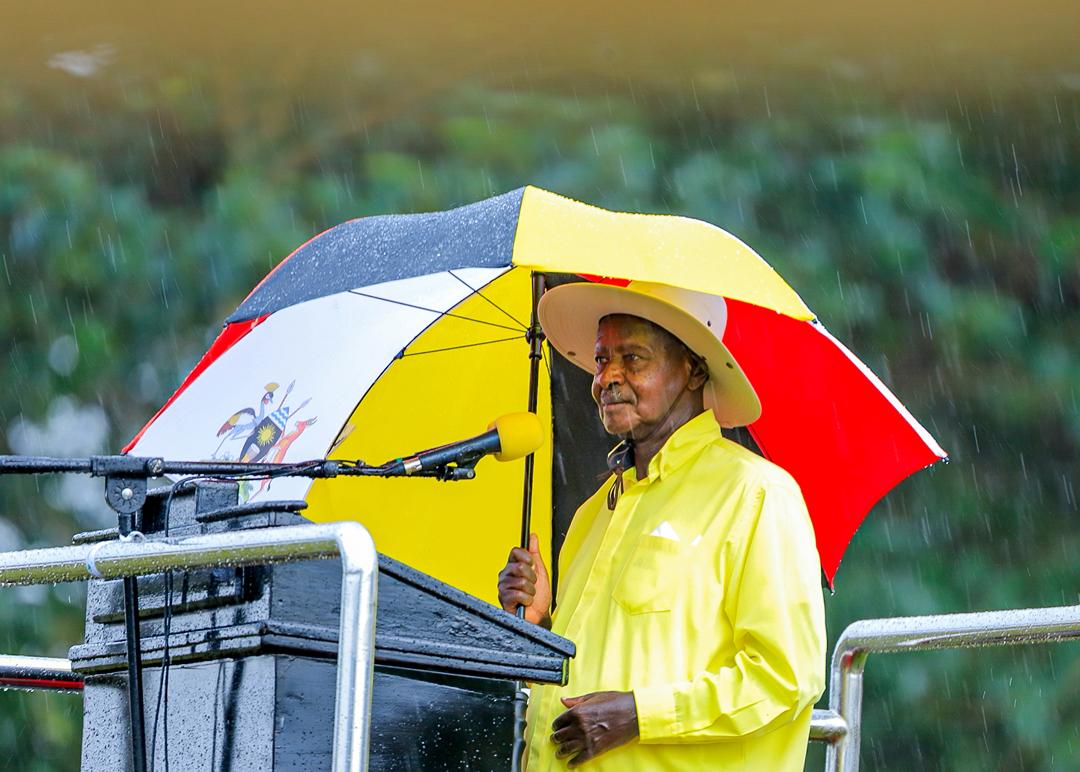
President Museveni has emphasized that educating the girl child remains central to empowering women and transforming societies, noting that Uganda’s long-standing education reforms have significantly expanded opportunities for girls across the country.
Speaking during the International Women’s Day celebrations held at Kololo Ceremonial Grounds, Museveni said the National Resistance Movement (NRM) government prioritised universal access to education as part of its broader strategy to eliminate poverty and build a more inclusive society.
He cited government initiatives such as Universal Primary Education (UPE) and Universal Secondary Education (USE), saying the programmes have disproportionately benefited girls by removing financial barriers that historically kept many out of school.
Museveni noted that education provides the foundation for independence and social transformation.
“When someone is educated, he or she cannot be suppressed. That was the real beginning of our reforms,” he said.
According to the President, the expansion of education opportunities has contributed to improvements in health outcomes, greater economic participation by women and stronger representation in public leadership.
He also highlighted government policies aimed at promoting gender equality, including affirmative action measures in university admissions that have helped increase the number of women accessing higher education.
Museveni said these measures have gradually translated into stronger representation of women in leadership positions.
“We have been able to increase their numbers in public offices, and they have proved to be better leaders and managers than men,” he added.
Beyond education, Museveni said the government has taken legislative and policy steps to strengthen the protection of women and girls.
These include harsher punishments for crimes such as rape and defilement, aimed at deterring gender-based violence and safeguarding the rights of women.
He added that broader government programmes focused on poverty alleviation, infrastructure development and wealth creation are designed to support families and ensure that women can fully participate in economic life.
Vice President Jessica Alupo used the occasion to congratulate Museveni on assuming the chairmanship of the East African Community (EAC), describing it as an opportunity to strengthen regional cooperation and development.
Minister of Gender, Labour and Social Development Betty Amongi also addressed the gathering, stressing the need to strengthen programmes that tackle poverty while promoting women’s economic empowerment.
Amongi said that eliminating poverty remains critical to ensuring that women and girls can access education, health services and economic opportunities.
The International Women’s Day event also featured the launch of initiatives aimed at combating gender-based violence and expanding economic empowerment programmes for women across the country.
